Before there was ibogaine — the isolated alkaloid studied in laboratories, debated in legislatures, documented in peer-reviewed journals — there was iboga. A root bark. A tradition. A way of understanding the structure of a human life that predates Western pharmacology by centuries.
This distinction matters. The way iboga is used in the Bwiti tradition is not the same as the way ibogaine is administered in clinical or quasi-clinical settings. Understanding the difference helps clarify what this medicine is, what it is not, and why the ceremonial context is not incidental — it is constitutive of the experience.
Iboga is the root bark of Tabernanthe iboga, a Central African shrub used ceremonially by the Bwiti peoples of Gabon, Cameroon, and Congo for centuries. Bwiti is not a religion — it is a knowledge system based on direct experience. Iboga is the tool through which that direct experience is accessed. The ceremonial context is not background detail; it shapes what the experience is and what is possible within it.

The plant and its origins
Tabernanthe iboga is a shrub native to the rainforests of Central Africa — primarily Gabon, Cameroon, and the Democratic Republic of Congo. It grows slowly, and the root bark that is used ceremonially takes years to develop the concentration of alkaloids that makes it pharmacologically active.
The plant has been used by the Babongo, Mitsogo, Fang, and other peoples of Central Africa for centuries. The exact history is difficult to trace with Western precision — because Bwiti is an oral tradition, not a written one. What is known is that the ceremonial use of iboga predates any Western documentation of it, and that the practices and protocols surrounding its use represent centuries of accumulated knowledge about how to work with this medicine safely and effectively.
For a full breakdown of the pharmacological difference between whole-plant iboga and isolated ibogaine, read the guide to iboga vs ibogaine.
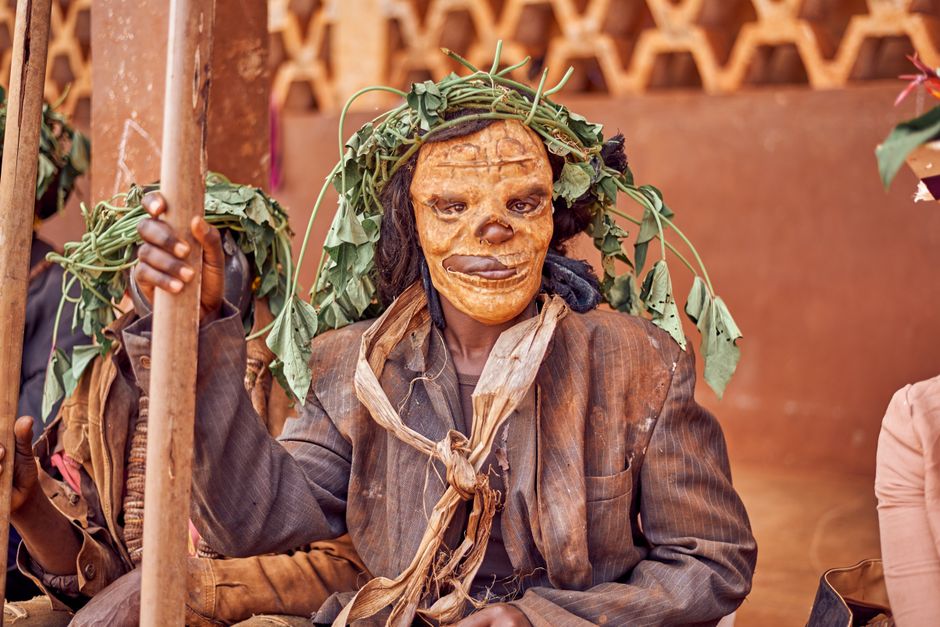
What is Bwiti?
Bwiti is frequently described as a religion, but this is a category error — one that happens when Western frameworks are imposed on something that does not map neatly onto Western categories. Bwiti is better understood as a knowledge system. A way of engaging with the fundamental questions of human existence: Who am I? What is my purpose? What am I actually doing with my life?
It is non-structured and non-religious in the sense of not having fixed doctrines, hierarchies, or creeds. It is based on direct experience — which is why iboga, as a tool for accessing direct experience of one's own psychological and spiritual reality, is central to it. The tradition holds that the answers to the fundamental questions cannot be given to a person — they must be encountered directly.
The Firetalk tradition is one of the primary ways Bwiti wisdom is transmitted. Knowledge is spoken around fires — in story, symbol, and metaphor. There are no texts to memorise. The transmission is alive, context-dependent, and adapted to the person receiving it. This is not a shortcoming of the tradition — it is a feature. Wisdom that cannot be made into a rule is wisdom that must be inhabited rather than followed.

Music, dance, and ceremony
The sonic environment of Bwiti ceremony is not background music. The Ngombi harp — a bridge-harp with a distinctive resonance — the Muogoungo musical bow, and various percussion instruments create what practitioners describe as a sonic container: a carefully structured auditory environment that supports and guides the inner journey that iboga catalyses.
Dance in the Bwiti tradition is not entertainment. It is a form of prayer — the body expressing what language cannot. It is also a diagnostic tool: the way a person moves, the quality of their presence in movement, tells the practitioner something about where they are in the inner process of the ceremony.

Why context matters
Iboga taken in a clinical setting — seated in a chair, monitored by medical equipment, in a quiet room — is a different experience from iboga taken in ceremony, with music, fire, intention, and the accumulated wisdom of a tradition that has been working with this medicine for centuries. Both contexts produce powerful experiences. But the ceremonial context provides something the clinical context generally does not: a framework for understanding what is encountered.
At ExploreBwiti, our work is rooted in the Bwiti tradition while remaining attentive to the specific needs and context of the people who come to us. We are in Vancouver, not Gabon. The people who come to us are not initiates seeking rites of passage — they are people seeking healing. The tradition is the foundation; the application is adapted. The ceremony page explains what that looks like in practice.
For context on the medical safety requirements that apply regardless of the setting, read the ibogaine treatment guide.

Who is not ready for this
Iboga demands honesty. It is not possible to take iboga ceremonially and avoid a direct encounter with what is actually happening in your life. For people who are not prepared for that encounter — or who are not psychologically stable enough to hold what it produces — the experience can be destabilising.
If you are in acute crisis, experiencing active psychosis, or are seeking this work primarily as an escape rather than an encounter, now is probably not the right time. The FAQ covers the full list of contraindications, and the application process includes a thorough conversation about readiness.
People on SSRIs, SNRIs, or with cardiac conditions face absolute contraindications that must be resolved before ceremony is possible. These are not preferences — they are medical requirements. The application is where that conversation starts. We respond personally to every application within 2–3 business days.
Frequently asked questions
What is the Bwiti tradition?
Bwiti is a knowledge system practised by the Babongo, Mitsogo, Fang, and other peoples of Central Africa — primarily Gabon, Cameroon, and the Democratic Republic of Congo. It is not a religion in the Western sense. It is based on direct experience rather than doctrine, and iboga is the primary tool through which that direct experience is accessed. Knowledge is transmitted through Firetalk — story, symbol, and metaphor spoken around fires — not through texts or hierarchies.
What is iboga and where does it come from?
Iboga is the root bark of Tabernanthe iboga, a slow-growing shrub native to the rainforests of Central Africa. It contains more than 30 alkaloids, of which ibogaine is the most studied. The root bark takes years to develop the alkaloid concentration that makes it pharmacologically active. In traditional Bwiti use, it is administered as a total alkaloid extract — the full spectrum of compounds present in the plant, not isolated ibogaine.
How is iboga used in Bwiti ceremony?
In Bwiti ceremony, iboga root bark or total alkaloid extract is prepared and administered in a carefully structured context that includes music from the Ngombi harp, movement and dance, fire, and the guidance of a practitioner trained in the tradition. The sonic environment — the specific instruments and the way they are played — is not incidental. It creates a container that shapes and supports the inner journey the medicine catalyses.
Is Bwiti ceremony the same as ibogaine treatment?
No. Bwiti ceremony uses whole-plant iboga preparations in a ceremonially-rooted context informed by a tradition that has worked with this medicine for centuries. Clinical ibogaine treatment typically uses pharmaceutical ibogaine HCl — an isolated alkaloid — in a medical setting. Both produce powerful experiences. The ceremonial context provides a framework for understanding what is encountered; a clinical setting generally does not.
Who is not appropriate for iboga ceremony?
Absolute contraindications include cardiac conditions with QT prolongation, current SSRIs or SNRIs (a supervised taper is required first), methadone without a specific transition protocol, active psychosis, severe liver or kidney disease, and pregnancy. Iboga also demands psychological readiness — people in acute crisis, seeking this work as an escape rather than an encounter, are not appropriate candidates at that moment.
Do you need to be initiated in Bwiti to work with iboga?
No. The work at ExploreBwiti is rooted in the Bwiti tradition but adapted for people seeking healing rather than initiatory rites of passage. The tradition is the foundation; the application is adapted to the specific context and needs of the people who come to us in Vancouver.